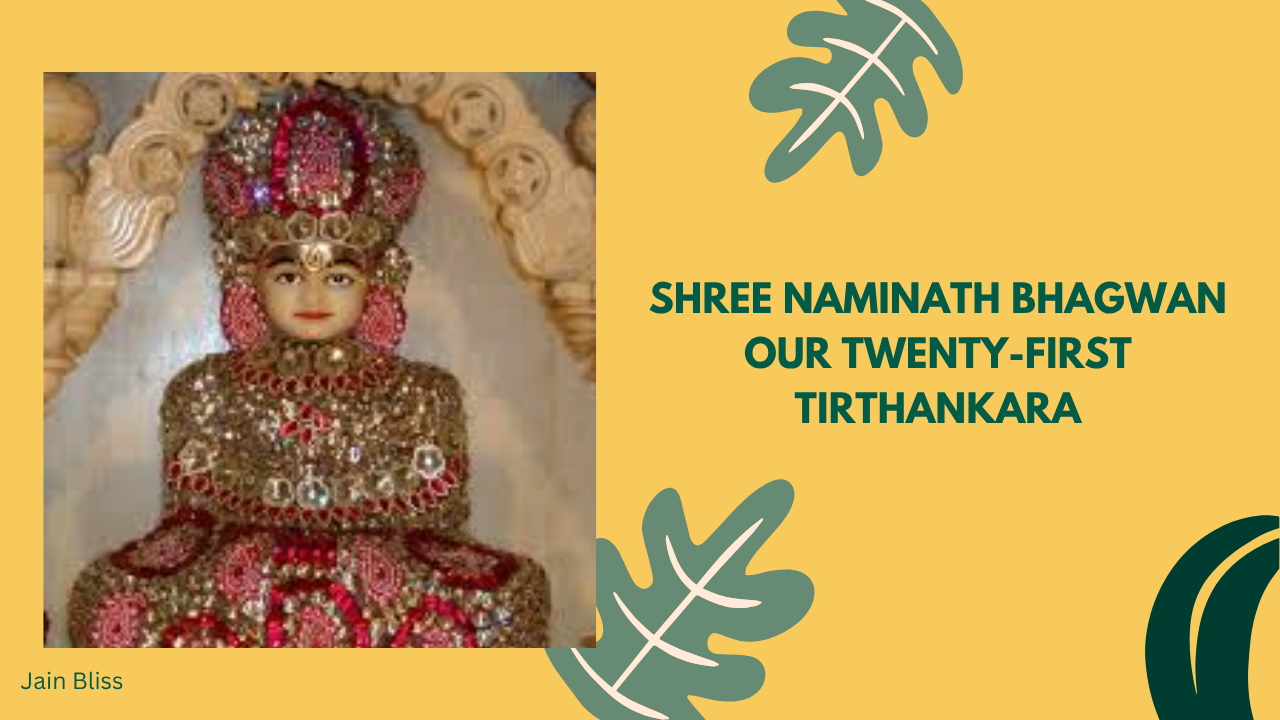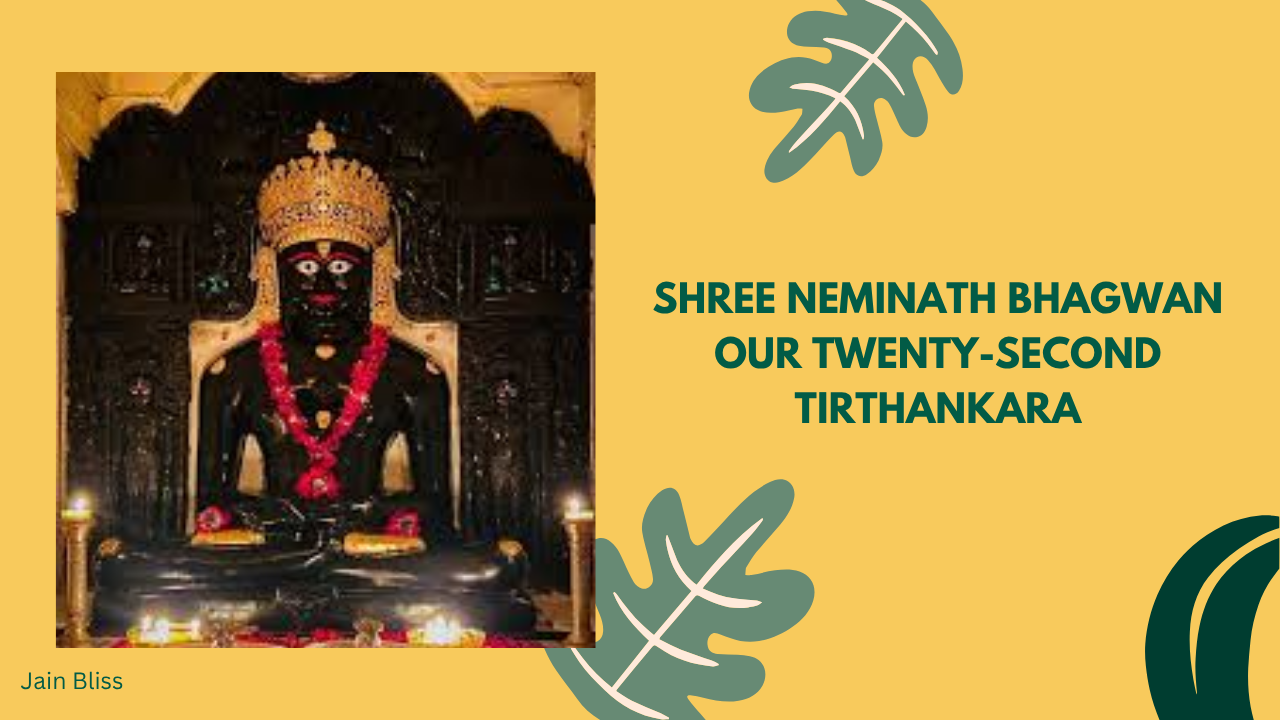
Shree Arishtanemi Bhagwan: The Twenty-Second Tirthankara
Shree Arishtanemi Bhagwan, also known as Neminath Bhagwan, is the 22nd Tirthankara of the current Avasarpini Kaal in Jainism. Revered for his compassion, non-violence, and renunciation, he is a cousin of Lord Krishna and is celebrated for renouncing his royal life upon witnessing the suffering of animals destined for his wedding feast.
Birth and Family
-
Parents: King Samudravijaya and Queen Shivadevi of the Yadu dynasty
-
Cousin: Lord Krishna
-
Birthplace: Traditionally Sauripura / Dwaraka
-
Symbol (Lanchan): Conch shell (Shankha), representing purity, spiritual awakening, and the call to righteousness
-
Childhood:From an early age, he displayed wisdom, spiritual inclination, and compassion, questioning worldly pursuits despite growing up in a royal environment
Renunciation and Ascetic Life
-
Wedding Day Renunciation: On the day of his marriage to Rajimati, Arishtanemi renounced worldly life after hearing the cries of animals brought for the wedding feast, exemplifying ultimate compassion and Ahimsa (non-violence)
-
Ascetic Practices: Adopted monkhood, undertook intense meditation and penance at Mount Girnar
-
Chief Disciple: Varadatta Muni, who carried forward his teachings
Keval Gyan (Omniscience)
-
Attained Keval Gyan on Mount Girnar after rigorous spiritual practices
-
Realized the ultimate truth of the universe, transcending worldly illusions
- Taught principles of Ahimsa, detachment, and self-discipline to monks, nuns, and householders
Nirvana (Liberation)
-
Attained Moksha (Nirvana) at Mount Girnar, Gujarat
-
His Nirvana day is celebrated with reverence by Jain devotees
-
Legacy: His life demonstrates the power of compassion, renunciation, and spiritual awakening
Teachings and Philosophy
-
Ahimsa (Non-Violence): Compassion for all living beings is central to spiritual life
-
Detachment: Renunciation of worldly pleasures is essential for spiritual progress
-
Self-Discipline: Practice meditation, austerities, and moral conduct
-
Four-Fold Order (Tirtha): Established a spiritual organization of monks, nuns, laymen, and laywomen
Unknown and Hidden Facts
-
Engaged to Rajimati, but renounced marriage due to compassion for animals
-
Mount Girnar remains a sacred pilgrimage site due to his Keval Gyan and Nirvana
- Conch shell (Shankha) symbolizes spiritual awakening and the call to righteousness
Questions & Answers
Q1. What is the significance of Arishtanemi Bhagwan’s renunciation? 👉 His renunciation reflects ultimate compassion and unwavering commitment to Ahimsa.
Q2. Where did he attain Keval Gyan? 👉 On Mount Girnar, Gujarat, after deep meditation and penance.
Q3. Why is he associated with the conch shell? 👉 The Shankha symbolizes purity, spiritual awakening, and the call to righteousness.
Q4. How is his Nirvana celebrated? 👉 Devotees visit Mount Girnar, perform pujas, and meditate on his teachings of non-violence and detachment.